
A Substack commentary by Luke Killam, published Aug. 12, 2026.
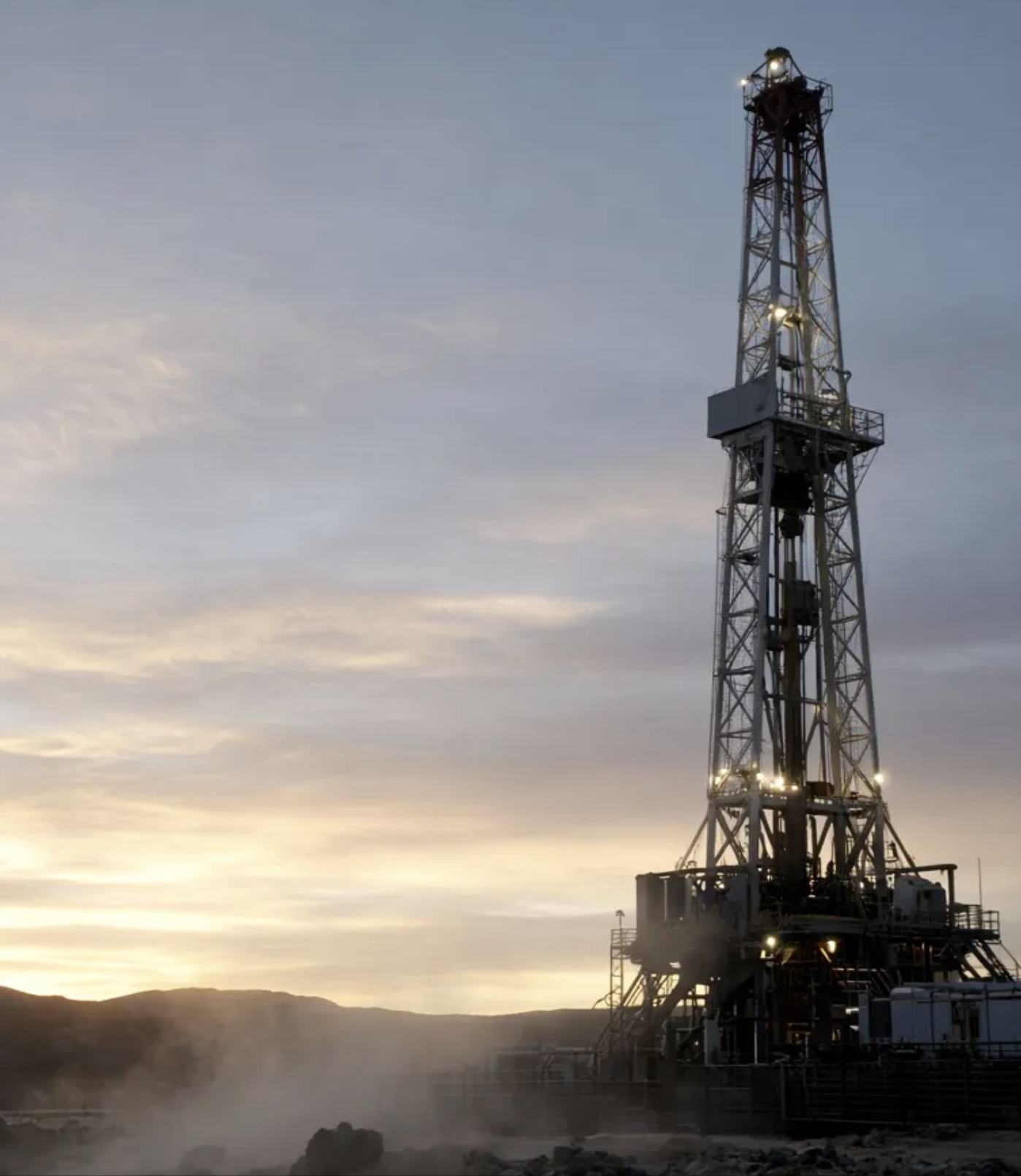
In February I published an article about enhanced geothermal, the technology that borrows the shale industry’s drills to mine heat instead of hydrocarbons. It was an optimistic piece, and one sentence in it was more optimistic than the rest. I wrote that Fervo Energy’s Cape Station in Utah was “on track to provide 100 MW of continuous clean power by mid-2026.”
It is now August 2026. Time to mark my own homework.
The machine kept its promise. The first generating unit at Cape Station reached mechanical completion in the first quarter and entered commissioning as I write this. The wells got drilled, the record temperatures held, the turbines exist. What slipped was the calendar: first power is now targeted for the fourth quarter of 2026, with roughly 100 MW operating in early 2027. Call it half a year of slide on a first-of-a-kind project, with the 500 MW second phase still under construction and still pointed at 2028.
Two weeks ago I wrote that seventy years of megaproject data should have cured honest optimism by now. It has not cured mine either. My February sentence was the mild, well-meaning lowball that every big build attracts. If I am going to keep writing about honest accounting, my own sentences should face the audit first.
But the schedule slip is not the story of the past six months. It is not even close.
What six months actually did
On May 13, Fervo began trading on the Nasdaq. The company upsized the offering to 70 million shares, priced it at $27, and raised $1.89 billion. The shares opened about thirty per cent higher, and Fortune called it clean energy’s biggest-ever IPO, a roughly ten-billion-dollar debut for a company whose flagship project had not yet delivered its first commercial electron.
The IPO made the headlines. The quieter news came in March, and it matters more. Fervo closed $421 million in non-recourse project financing for Cape Station’s first phase. Non-recourse means the lenders can look only to the project itself for repayment, not to the company behind it. Banks do not lend that way to science experiments. They lend that way to infrastructure.
And beneath both sits the paper that makes everything else possible. Google signed a 115 MW power purchase agreement with Fervo years before the IPO, has since added conventional geothermal from an established operator to the same portfolio, and Meta has contracted for geothermal supply at its own data-centre sites. The buyers are the familiar ones, the hyperscalers whose appetite for firm, clean, around-the-clock power I spent July writing about. The structure is familiar too: a creditworthy customer commits to years of output before the wells are finished, making everything downstream financeable.
Read those three developments in order. A long-term contract made the project bankable. Bankability brought in project debt on infrastructure terms. And the public market then put a price on the whole proposition, a price that moves every trading day, in plain view of every developer, lender, and rival on Earth.
Not one of the past six months’ milestones is a drilling record.
The wrong question, asked well
My February piece asked whether the technology was ready. It walked through the plant types, the geology, the drilling techniques, the induced-seismicity record, the water numbers. All of that holds up, and I would still send a curious reader there for the machinery of the thing.
But I was asking the question the way an engineer would ask it, and the past six months answered a different question entirely. In July I argued that Canada’s energy constraint is not technology but the market machinery around it, the pricing, the contracts, the allocation of risk. Geothermal has now demonstrated that argument in real time, in public, with a ticker symbol.
An IPO gives a technology something it cannot get anywhere else: a public price. Before May, the risk around enhanced geothermal lived in private rooms: venture rounds, term sheets, confidential models. Reasonable people could believe almost anything about it. Now there is a number. The number is imperfect, as all such numbers are, but it is public, liquid, updated daily, and every future geothermal project on the continent will be priced against it. That is what a capital market is for. It is a machine for making disagreement expensive.
The offtake contracts gave the sector something older, and it is precisely what my July series kept circling. The oldest rule in project finance is that no long-term contract means no project. Enhanced geothermal did not scale when the drilling got clever. It scaled when a customer with a thirty-year horizon and an unbreakable need for firm power showed up and signed. The hyperscalers are doing for geothermal what I argued defence procurement could do for critical minerals: playing the anchor tenant whose signature turns a prospect into an asset.
The technology was necessary. It was never going to be sufficient. What changed in six months is that the capital machinery arrived, and the day it arrived, the story stopped belonging to the engineers.
The wire, again
There is one more rhyme with this series, and it is almost funny. Ask what constrains Cape Station now that the wells work and the money is raised, and the answer that keeps surfacing is not underground at all. It is transmission: the lines and interconnection needed to move hundreds of new megawatts out of rural Utah to the loads that want them.
A brand-new generation technology, financed by the newest money in the market, runs straight into the oldest constraint in the industry. Wherever this series goes, the wire is waiting.
The Canadian question
The Canadian chapter of this story has a different shape.
The best-known name in Canadian next-generation geothermal is Eavor Technologies, based in Calgary. It draws heavily on the oil-and-gas drilling talent Alberta produces better than almost anywhere, and its closed-loop design, which circulates fluid through sealed wellbores rather than fracturing rock, sidesteps some of the risks associated with fracture-based designs like Fervo’s. In July, Eavor received $8 million from Alberta’s TIER fund toward Eavor-Jules, a roughly $83 million project to push its technology deeper and hotter.
That is real support for real innovation, and I am glad the province made it. But in the same eight weeks, the American champion raised $1.89 billion on the Nasdaq, while the Canadian champion secured an $8 million grant.
Canada is not without proof points. FutEra Power’s Swan Hills hybrid, Canada’s first co-produced geothermal power project, has been selling electricity from a legacy oilfield since 2022. Its next act, a closed-loop pilot, moves ahead this year with a $5 million provincial grant. In Saskatchewan, the DEEP project, which could become Canada’s first standalone commercial geothermal power plant, is still working toward that milestone.
Add it all up, and Canada’s installed geothermal generating capacity remains a rounding error. That is the uncomfortable part.
The gap is not talent. Calgary supplies drilling expertise to geothermal projects around the world. The gap is not geology alone, though our resource is deeper and cooler than Utah’s. The gap is the capital machinery that has come together in the United States over the past six months: the anchor tenant, the bankable offtake, the non-recourse lender, the public market.
Fervo’s stack was built in a market where data centres sign decade-long contracts for firm power and regulators have learned to approve them. No customer has yet offered a Canadian geothermal developer that same ladder. Until one does, our champions will keep running on grants while America’s champions run on balance sheets.
If Canada wants the second act of its drilling industry to happen here, the to-do list is not a research program. It is a customer with a long-term contract, and everything that follows from one.
What has not changed
February’s cautions all still stand. Enhanced geothermal remains expensive per megawatt, unforgiving of bad geology, and exposed to seismicity risk that requires real management, not dismissal. One company’s IPO is not an industry, and a thirty per cent first-day pop prices expectations, not electrons. The megawatts that settle the argument arrive this winter, not on a trading screen.
And schedules remain hard. My own missed mid-2026 call is the proof. That is not a reason for cynicism. It is a reason for the discipline this series keeps returning to: honest ranges, staged commitments, and contracts that survive the slide.
The right question
Six months ago I asked whether the technology was ready, and I stand by the answer. The drills work. The wells hold. Crews are bolting the turbines down in Utah right now.
But the question that decided the last six months was never about the drill bit. It was about who signs, who lends, who lists, and who carries the risk of being wrong, and the answer came from contract rooms and a stock exchange, not from a well bore.
The drill bit was never the bottleneck. The money was. Everything about the next decade of geothermal, in Utah, in Alberta, anywhere the rock is hot, now follows from a single question: who signs?
The revolution will not be drilled. It will be signed.