
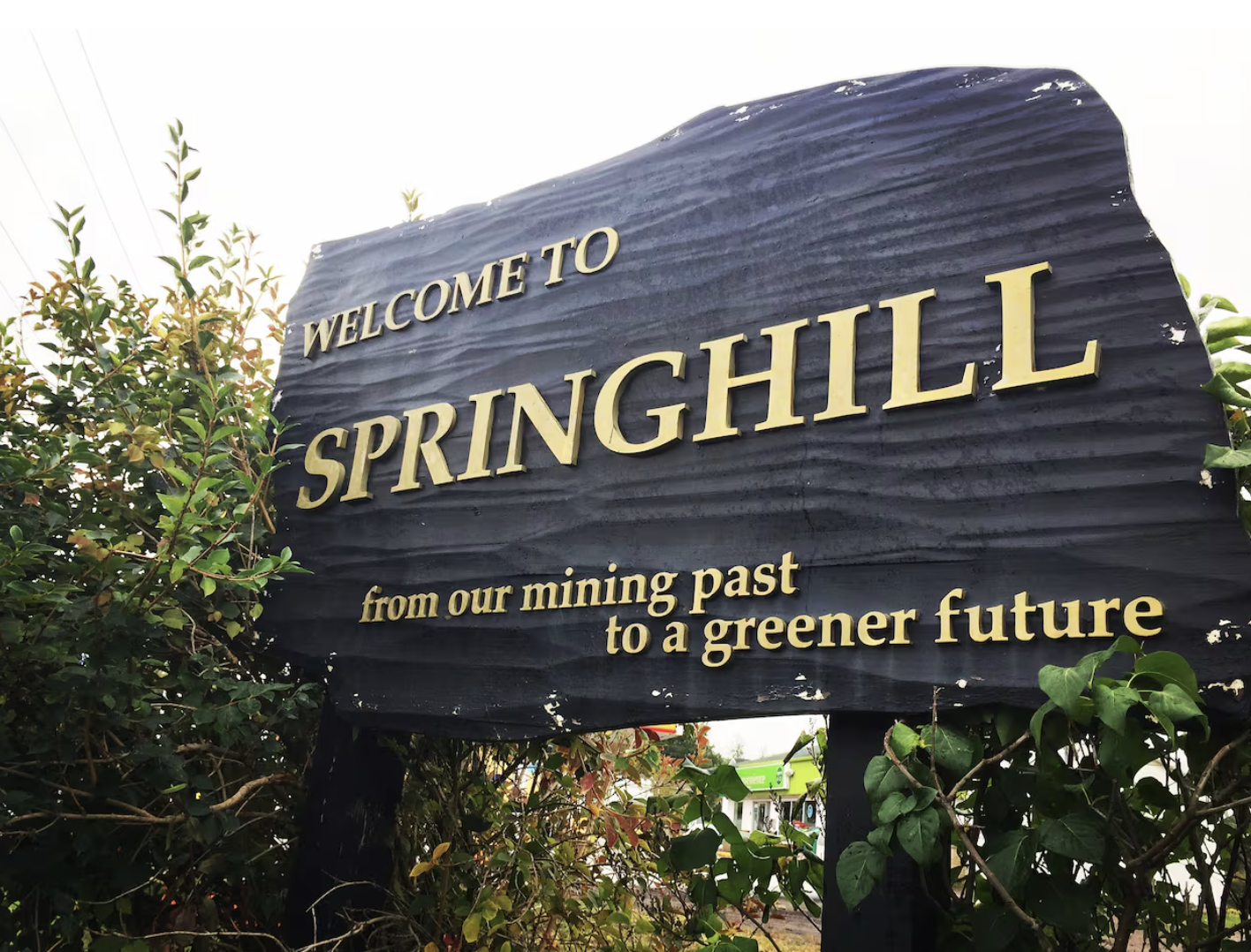
Springhill, N.S., once known for its coal mining disasters, has become a green energy pioneer by using geothermal energy from water heated in an abandoned coal mine. The energy is used to heat several of the town's buildings. (Anjuli Patil/CBC)
Article written by Sam McBain, Local Journalism Initiative Reporter - The Advocate The Advocate
Cumberland council received a report on the Geothermal Greenhouse Action Plan (GGAP) and the geothermal energy technical coordinator (GETC) at its most recent meeting.
The GGAP outlines a pathway to develop a community greenhouse utilizing geothermal energy from mine water under Springhill, beginning with an overview of Springhill’s geothermal resource, followed by an assessment of mine water temperatures, well data and thermal potential. The plan evaluates three greenhouse development scenarios and provides guidance on crop selection, energy performance, and operational considerations.
The role of the GETC on the other hand, is to “continue the momentum from the 2023 to 2025 plan initiatives,” according to GETC for the Municipality of Cumberland Trevor Kelly, “which were developed in collaboration with the Nova Scotia Department of Energy.”
That specific plan focuses on five key themes: data gathering, resource evaluation, economic utilization, pilot project demonstration, professional development, and a broader geothermal analysis of Cumberland County beyond mine water geothermal.
The GGAP found Springhill’s mine water to be ideal for geothermal energy, even unique in its usability.
“Reports suggest greenhouses as an ideal user of mine water geothermal energy. The community and municipality see strong potential for economic, social and environmental benefits, especially for local food production. This is where the Geothermal Greenhouse Action Plan comes in,” stated Kelly.
Springhill’s abandoned coal mines contain large volumes of warm water that are ideal for heating and cooling. According to Kelly, using this ideal water would ensure high efficiency and significant cost savings relative to traditional systems.
Local facilities already use this resource and have been since the late 1980s. So expanding into agriculture offers a chance to boost food production, reduce emissions, and showcase innovation, among other things.
“Our vision is for Springhill to lead in sustainable agriculture through mine water geothermal energy,” he continued.
The proposed greenhouse would be 1,100 square metres, and would use passive solar principles and low-temperature heating, thereby reducing annual energy costs by as much as $51,000 according to the presentation.
Kelly also mentioned the possibility of using this resource to expand geothermal heating and cooling to other buildings in the town, reducing the need for oil-fired systems. A study is currently underway to retrofit the NSCC campus building, which also uses an oil-fired system.
District 2 Coun. Anthony Fromm asked how big of a greenhouse project could feasibly be built in the future, to which Kelly responded that a five-acre greenhouse was conceivable. Director of development and planning Glen Boone stepped in to say, though, that something that size would be contingent on a very good deal being found on land.
District 6 Coun. Scott Lockhart chipped in to remind council of the buildings currently operating from geothermal energy.
“There’s a bunch of people using it, the new fire hall, the arena. It works. And we’re talked about, you know. In Sweden, they have meetings about Springhill.”