
November 17, 2025
Published in the New Yorker print edition of the November 24, 2025, issue, with the headline “The Heat of the Moment.”
Article by Rivka Galchen, Department of Science Section
Here’s an excerpt:
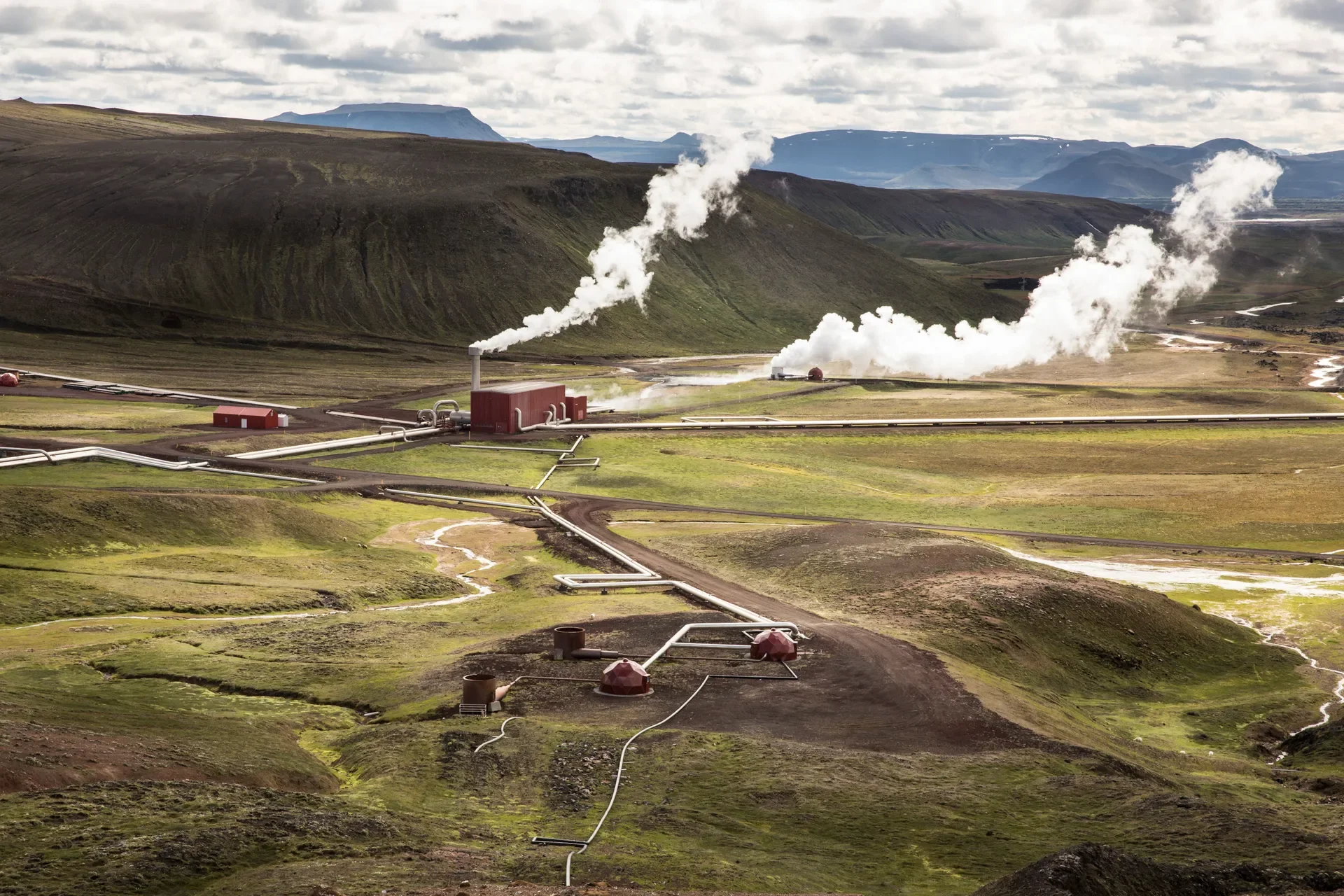
Near the Krafla geothermal-energy plant, scientists drilled down to magma, creating the most powerful geothermal well in the world.Photograph by Claire-Lise Havet / Hans Lucas / Redux
At more than five thousand degrees Celsius, the Earth’s core is roughly as hot as the surface of the sun. At the Earth’s surface, the temperature is about fourteen degrees. But in some places, like Iceland, the ground underfoot is much warmer. Hot springs, geysers, and volcanoes are surface-level signs of the Earth’s inferno. Dante’s description of Hell is said by some to have been inspired by the landscape of sulfurous steam plumes found in Devil’s Valley in Tuscany.
Snow monkeys and humans have been using Earth-heated waters as baths for ages. In the Azores, a local dish, cozido de las furnas, is cooked by burying a clay pot in hot volcanic soil; in Iceland, bread is still sometimes baked this way. The first geothermal power generator was built in Devil’s Valley, in 1904, by Prince Piero Ginori Conti of Trevignano, who had been extracting borax from the area and thought to make use of the steam emerging from the mining borehole. The generator initially powered five light bulbs. Not long afterward, it powered central Italy’s railway system and a few villages. The geothermal complex is still in operation today, providing one to two per cent of Italy’s energy. In the United States, the first geothermal plant was built in 1921, in Northern California, in a geyser-filled area that a surveyor described as the gates of Hell. That plant powered a nearby resort hotel and is also still in use.
There aren’t gates of Hell just anywhere. A kilometre below ground in Kamchatka is considerably hotter than a kilometre below ground in Kansas. There is also readily accessible geothermal energy in Kenya (where it provides almost fifty per cent of the country’s energy), New Zealand (about twenty per cent), and the Philippines (about fifteen per cent)—all volcanic areas along tectonic rifts. But in less Hadean landscapes the costs and uncertainties of drilling deep in search of sufficient heat have curtailed development. This partly explains why, in the field of clean energy, geothermal is often either not on the list or mentioned under the rubric of “other.” For decades, both private and government investment in geothermal energy was all but negligible.
That has now changed. In the past five years, in North America, more than a billion and a half dollars have gone into geothermal technologies. This is a small amount for the energy industry, but it’s also an exponential increase. In May, 2021, Google signed a contract with the Texas-based geothermal company Fervo to power its data centers and infrastructure in Nevada; Meta signed a similar deal with Texas-based Sage for a data center east of the Rocky Mountains, and with a company called XGS for one in New Mexico. Microsoft is co-developing a billion-dollar geothermal-powered data center in Kenya; Amazon installed geothermal heating at its newly built fulfillment center in Japan. (Geothermal energy enables companies to avoid the uncertainties of the electrical grid.) Under the Biden Administration, the geothermal industry finally received the same kind of tax credits given to wind and solar, and under the current Trump Administration it has received the same kind of fast-track permitting given to oil and gas. Donald Trump’s Secretary of Energy, Chris Wright, spoke at a geothermal conference and declared, in front of a MAGA-like sign that read “MAGMA (Making America Geothermal: Modern Advances),” that although geothermal hasn’t achieved “liftoff yet, it should and it can.” Depending on whom you speak with, either it’s weird that suddenly everyone is talking about geothermal or it’s weird that there is a cost-competitive energy source with bipartisan appeal that no one is talking about.
Scientific work that has been discarded or forgotten can return—sometimes through unknowing repetition, at other times through deliberate recovery. In the early nineteen-seventies, the U.S. government funded a program at Los Alamos that looked into developing geothermal energy systems that didn’t require proximity to geysers or volcanoes. Two connected wells were built: in one, water was sent down into fractured hot, dry rock; from the other, the steam that resulted from the water meeting the rock emerged. In 1973, Richard Nixon announced Project Independence, which aimed to develop energy sources outside of fossil fuels. “But when Reagan came into office, he changed things,” Jefferson Tester, a professor of sustainable energy systems at Cornell University, who was involved in the Los Alamos project, told me. The price of oil had come down, and support for geothermal dissipated. “People got this impression that it was a failure,” Tester said. “I think if they looked a little closer, they would see that a lot of the knowledge gained in those first years could have been used to leverage what is happening now.”
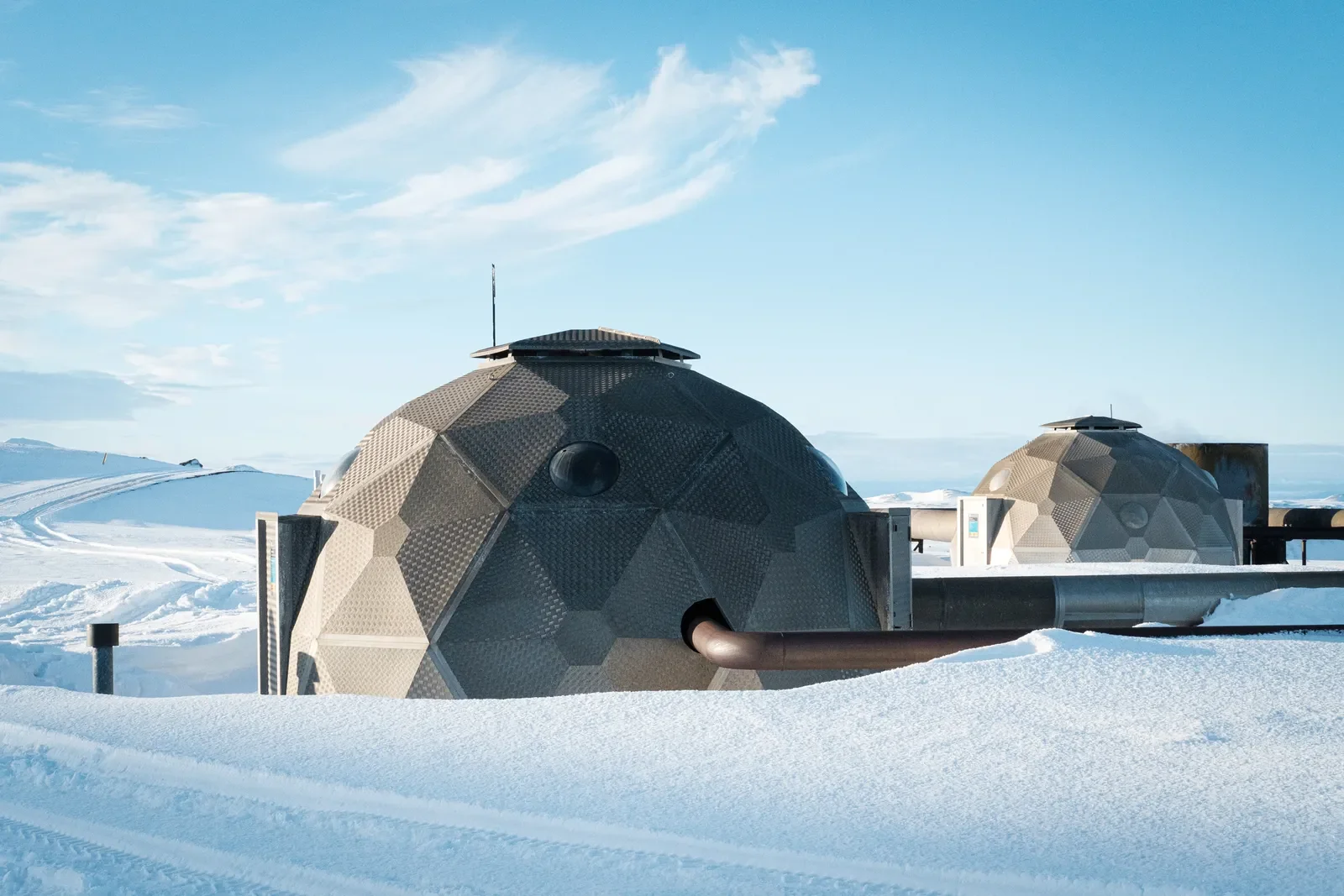
Boreholes at the Krafla Geothermal Station.Photograph by Victor Bouchentouf / Hans Lucas / Redux
Tester went on to help establish the M.I.T. Energy Lab (now called the Energy Initiative), which focusses on advancing clean-energy solutions. He and his colleagues felt that students needed to know the history of the research into diverse energy sources, so they put together a course and a textbook called “Sustainable Energy: Choosing Among Options.” In 2005, the Department of Energy, under George W. Bush, commissioned a group consisting of Tester and some seventeen other experts and researchers—including drilling engineers, energy economists, and power-plant builders—to investigate what it would take for the U.S. to produce a hundred thousand megawatts of geothermal energy, a bit more than one-fifth of the energy the U.S. had consumed that year. (Geothermal energy production in the U.S. at that time was around three or four thousand megawatts.) The experts avoided framing their support for geothermal in environmental terms. “The feeling was that you weren’t supposed to talk about carbon, because then it would be perceived as about climate change,” Tester said.
In 2006, Tester and his colleagues published their report, “The Future of Geothermal Energy.” One finding was that new drilling technology employed by the oil-and-gas industry was changing the economics of geothermal power generation. Latent ideas—like those from the Los Alamos project—had met their moment. “I was called to testify a few times before Congress. It was a relatively modest investment that was needed, and people were excited,” Tester told me. “But then we submitted the report to the Department of Energy. And they did nothing. It was crazy.” He was still visibly dismayed.
One explanation for the lack of action is that, around that time, the U.S. went from being an oil importer to an oil exporter. This turnaround was largely due to the innovations of George Mitchell, a second-generation Greek American in Galveston, Texas, who spent years trying to extract oil and gas from the Barnett Shale formation, in North Texas, in an economically viable way. His approach synthesized hydraulic fracturing, or fracking, with horizontal drilling. Fracking involves injecting fluid down a well at high pressures, which cracks the subsurface, and the horizontal drilling augments the area of cracking. Eventually, Mitchell’s company, helped by generous tax incentives, made the economics work. Vast oil reserves became accessible. Fortunes were made. Fracking overwhelmed the renewed interest in geothermal power. But a couple of decades later there was a reversal: fracking accelerated geothermal power.
Tim Latimer, the thirty-five-year-old C.E.O. of Fervo Energy, a geothermal company founded in 2017, grew up in Riesel, Texas, a small town about fifteen miles outside Waco. After graduating from the University of Tulsa with a degree in mechanical engineering, Latimer wanted a well-paid engineering job close to home. “My adviser was just, like, ‘Have you ever heard of the oil-and-gas industry?’ ” he said, smiling.
As a greenhorn drilling engineer with the international mining company BHP Billiton, Latimer was put on a fracking project in the Eagle Ford Shale, in South Texas. The shale, which is a Cretaceous-era formation dense with marine fossils from when the area was an inland sea, is relatively hard and hot. “The motors in our drill systems were failing early,” Latimer said. His supervisors suspected that this was because of the wells’ unusually high temperatures, around a hundred and seventy-five degrees Celsius. “They said, ‘Can you research what tools we could use to deal with the fact that these drilling temperatures are really high?’ ” Latimer told me.
Much of the relevant work Latimer came across turned up in papers about geothermal energy. “I’d never heard of geothermal before,” he said. “I was, like, ‘Well, this seems pretty cool.’ ” When Latimer read the 2006 “Future of Geothermal Energy” report, including its description of the Los Alamos geothermal project, he saw parallels to his work in oil and gas. The report described two big technical challenges that were standing in the way of affordable, bountiful clean energy. One was getting drilling costs down—an area that oil and gas had made great progress in. The other was getting water flowing through hot rock that isn’t sufficiently permeable, like shale, so that you can generate steam. “And I’m just looking at the rig, being, like, ‘This is a solved problem.’ ” Generating flow where there isn’t much naturally—that’s what hydraulic fracturing does.
Read or listen to the full article here.