
Article published November 22, 2025, for subscribers of The Economist.
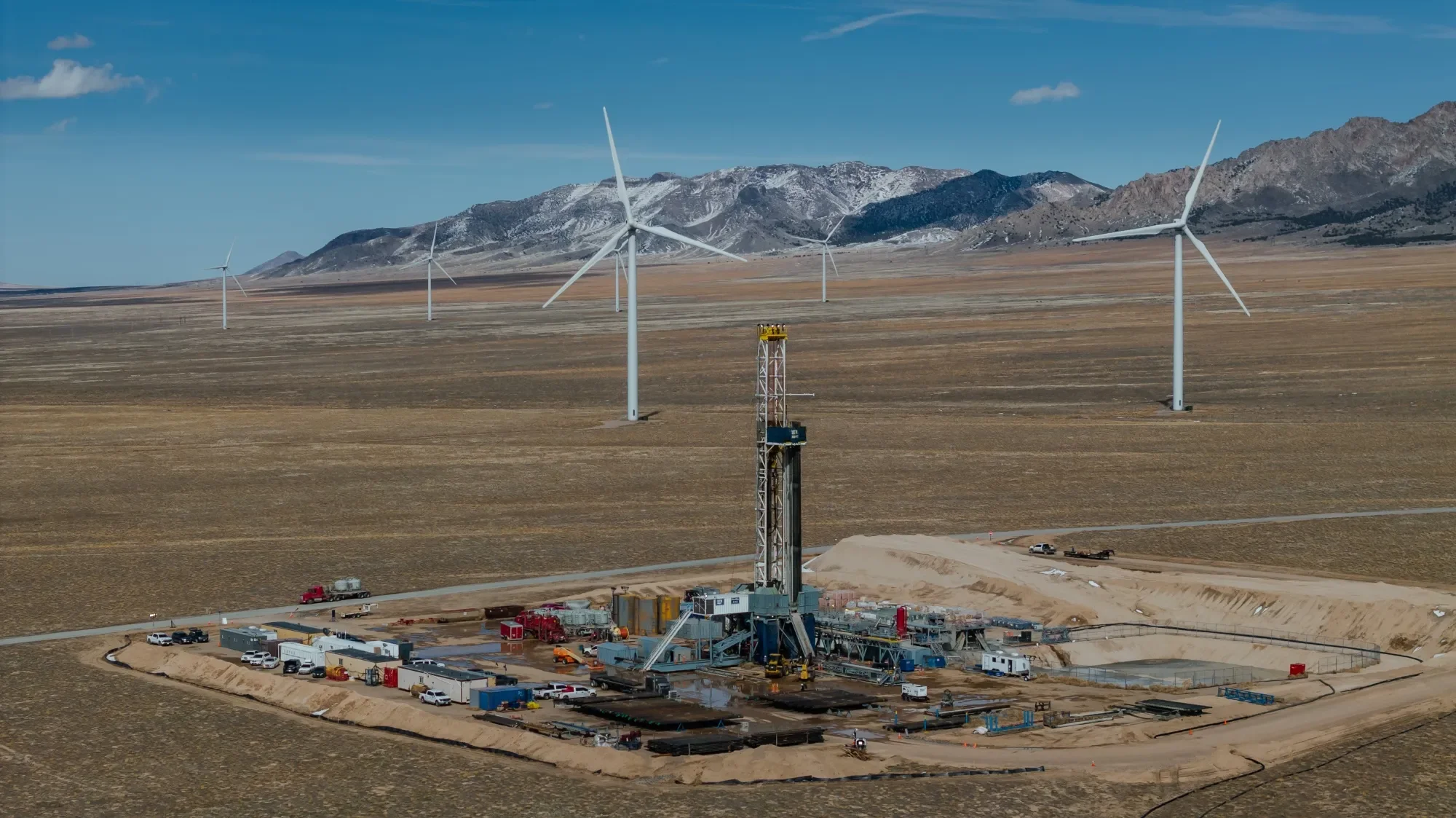
Fervo Energy's Cape Station project in Utah will send geothermal energy to California. (Fervo Energy)
Excerpt below:
”The future of clean energy is unfolding on a desert plateau about four hours north-east of Las Vegas. Dotted around the spectacular sands near Milford, Utah, are nearly two dozen wells, each reaching deep into the Earth where the rocks are permanently hot.
Standing atop one of the electrified rigs that drilled those wells, Jack Norbeck has to shout to make himself heard over the fierce winds. 'Ten rigs that are identical to the one that you see sitting here in front of us', he says, 'could produce a gigawatt of new output per year.' That is as much as a typical nuclear reactor, enough to power a million homes. Mr Norbeck says that his firm, Fervo, has “acquired over half a million acres of geothermal mineral rights across the US, which we see as over 50 gigawatts of opportunity”.
Fervo is a buzzy geothermal-technology startup backed by Google and other high-powered tech investors that wants to turn a once-neglected source of energy into a powerhouse. The privately held firm, valued at some $1.4bn, will start producing electricity next year in the first phase of a 500-megawatt deal with the power division of Shell, an oil company, and with a Californian utility. That is the largest commercial contract agreed for geothermal electricity in the industry’s history.
It is the first shot in an incipient geothermal revolution. Today, less than 1% of global (and American) energy comes from geothermal. But researchers at Princeton University predict that technical innovations mean widely available geothermal power could, by 2050, produce nearly triple the current output of the country’s nuclear power plants (which supply roughly 20% of America’s electricity at present). BY 2035, the International Energy Agencey reckons cummulative investment in geothermal globally could reach $1Trn, a big jump from the $1Bn invested in 2024.”
Read the full article here.