
Canada has spent decades building world-leading capabilities in drilling, subsurface engineering, and large-scale energy project delivery. These capabilities have helped establish the country as a major player in the global oil and gas industry, and they’re now providing a foundation for next-generation geothermal innovation.
“We pulled on a lot of proven or emerging technologies from oil and gas and integrated them into a novel application,” says Matt Toews, Chief Technology and Operating Officer at Eavor, a geothermal technology company based in Calgary that has developed a proprietary closed-loop geothermal system known as the Eavor-Loop™.
“This is a made-in-Canada solution,” says Mark Fitzgerald, President and CEO at Eavor. “It’s built on the back of decades of innovation and expertise in the resource sector and the oil and gas sector in Canada.”
Canada already has the expertise. The next step is deploying it.
Meeting the world’s growing energy needs
Meeting the modern world’s energy needs is an increasing challenge, with electricity demand surging. Data centres are expanding rapidly, transportation and industry are using more and more electricity, and rising global temperatures increase the need for air conditioning. A growing global population and continued urbanization add to the pressure.
With the world’s power demands rising, geothermal energy has an important role to play. It provides not only a low-carbon source of energy, but also one that’s secure, reliable, and dispatchable. It’s also available when and where it’s needed, at a predictable cost.
“Geothermal is needed for grid stability. It’s needed to provide 24/7 clean power. And it’s needed to provide power when the sun’s not shining or the wind’s not blowing,” says Toews.
Scalable, accessible energy
Geothermal energy harnesses heat from beneath the Earth’s surface to generate electricity and provide heating. Conventional geothermal systems are limited, however — they require specific geological conditions.
With closed-loop geothermal, like the Eavor-Loop™, rare geological conditions or hydrothermal resources are no longer necessary.
“We don’t need to find a rare geological aquifer or geological resource,” says Toews. “We drill a closed-loop system, which is an interlinking network of deep wellbores or pipes in the subsurface, and we harvest the heat naturally by flowing water through them. There’s no flow into or out of a reservoir, there’s no fracking, and there’s no water use, and that’s what makes it scalable. We can produce heat from pretty much anywhere on earth with our system.”
In addition to being more widely deployable, closed-loop systems provide stable, continuous energy output. At scale, geothermal isn’t just an energy source; it’s energy infrastructure delivering clean baseload power.
From concept to commercial deployment
These systems don’t just work in theory, they’re already being delivered in real-world conditions.
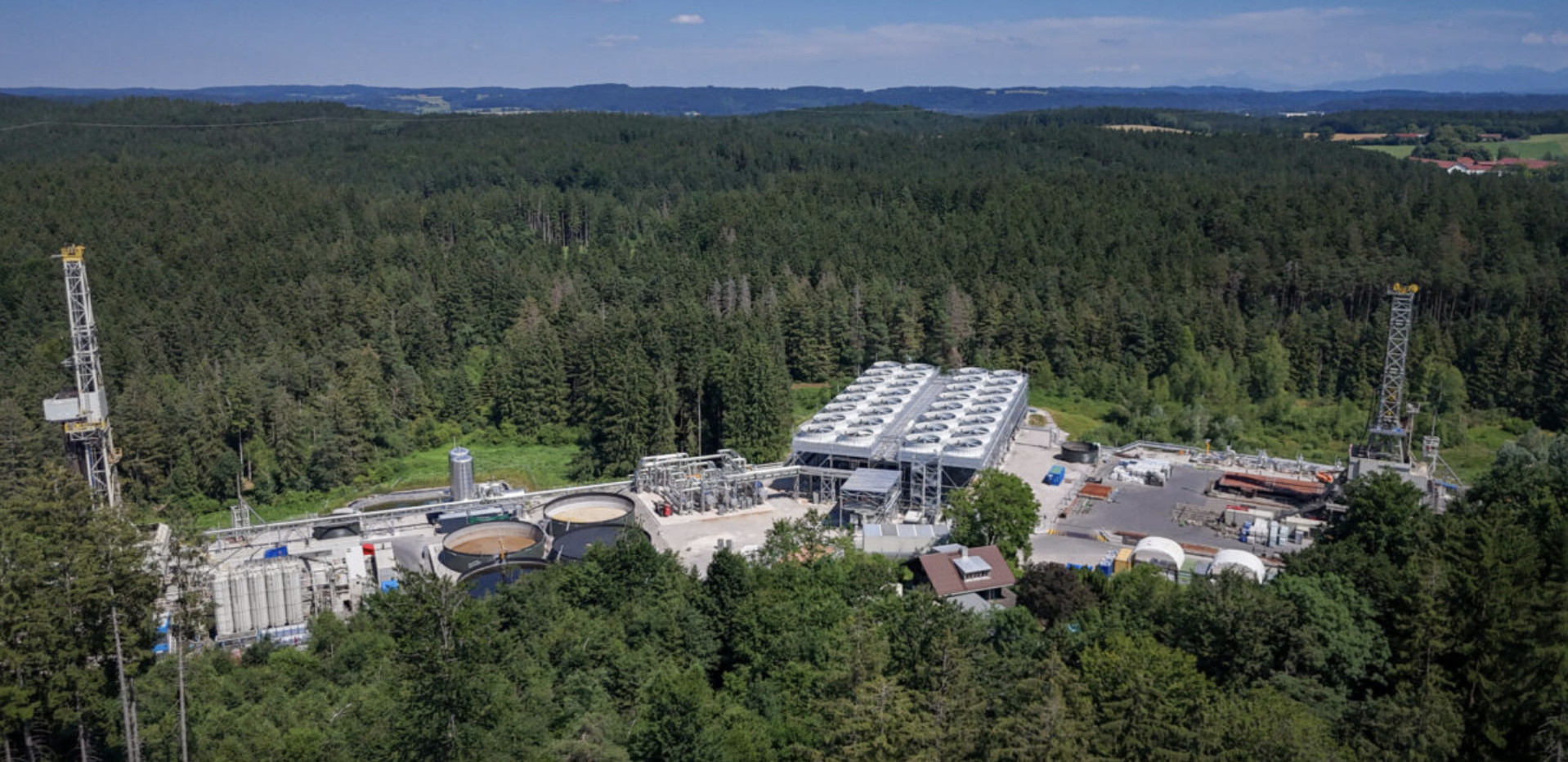
Geretsried is Eavor’s first commercial-scale project using the Eavor-Loop™ system. Situated on the site of a failed traditional geothermal project in Bavaria, Germany, Geretsried has become a powerful example of how closed-loop geothermal can advance toward repeatable, global deployment.
We can produce heat from pretty much anywhere on Earth with our system.
“We successfully showed the technology working,” says Toews. “We constructed it, we’re operating it, and we’re generating heat and power exactly as we predicted.”
The Eavor team learned several important lessons on the project and is ready to apply them to future deployments. “We now know exactly what to do and how to do it,” says Toews.
As Heymi Bahar, Senior Analyst at the International Energy Agency, told The New York Times: “If this technology is proven and commercially viable, it’s a complete game-changer everywhere in the world.”
The next step: deployment at scale
With the technology now proven at a commercial scale, it’s time for the focus to shift from demonstration to execution. Eavor is already scaling internationally, with projects and partnerships advancing in Germany, Japan, and North America.
“When governments support innovation and efficient policy frameworks, projects move more quickly and we can capitalize on our competitive advantage,” says Fitzgerald.
Eavor’s progress is also attracting international recognition. Eavor was recently named to TIME’s list of the World’s Top GreenTech Companies for 2026, ranking number two in a list of 250 companies.
“Canada has the ability to provide clean, stable, reliable energy all across the world,” says Fitzgerald. “It’s a great opportunity to take what we’re global leaders at and to export that to the world.”