
Article written by Hope Lompe for The Energy Mix, on May 20, 2026.
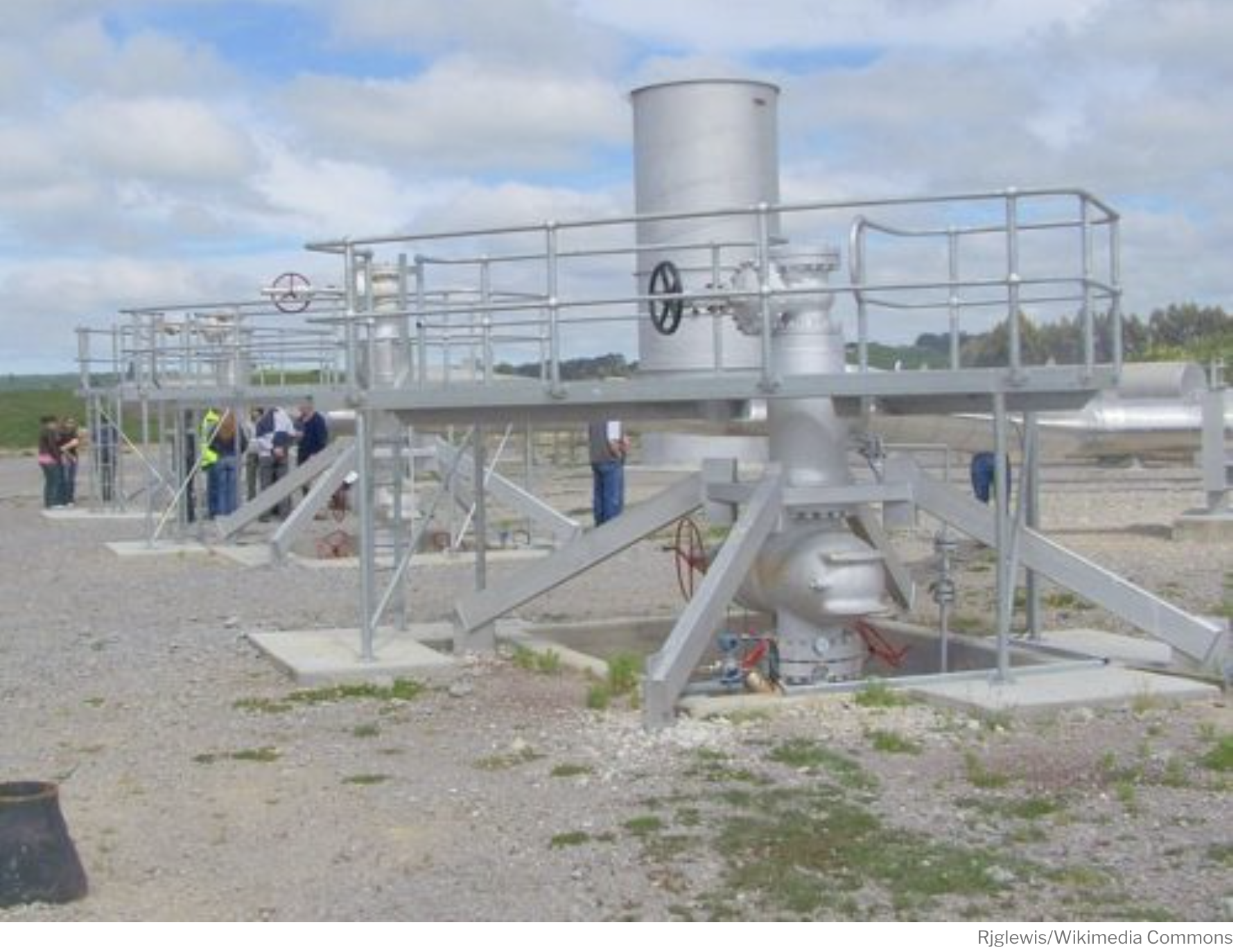
“Almost every other country that has geothermal resources of Canada’s quality has developed them, despite the high upfront costs and challenges geothermal faces,” Daniel Alonso Torres, director for British Columbia at Geothermal Canada, told The Energy Mix.
For example, Iceland generates 31% of its electricity from geothermal energy, which is high-temperature heat drawn from beneath the Earth’s surface and used for power and heating. In Kenya, the number is about 47%. In both cases, the necessary infrastructure was developed directly by the governments.
In Canada, geothermal development is left to private companies, with federal and provincial agencies offering limited financial support and incentives.
But then Canada has something the other countries lack: thriving oil, natural gas, and hydropower industries. Experts say that’s one reason geothermal has struggled to take off and policy has lagged despite the huge potential.
Now, as the instability of fossil fuels caused by war in the Middle East pushes countries toward renewables, Canada’s geothermal industry may be facing a unique opportunity.
“The oil supply shock that we have experienced in the past couple of weeks is a bit reminiscent of the 1970s, but with more data and more information,” Alonso Torres said. “So overall, there is a huge opportunity within Canada.”
In 2012, a Geological Survey of Canada report [pdf] said, “Canada’s in-place geothermal power exceeds one million times Canada’s current electrical consumption, although only a fraction of this can likely be produced,” due mostly to limitations of technology and location. While that figure is outdated, given Canada’s escalating electricity use as well as new technological developments, the potential remains enormous.
But challenges remain. Geothermal calls for mining-scale development, but offers utility-scale returns, said Alonso Torres. That means expensive upfront costs and slow returns.
Canada’s geothermal sector must also compete for investment against more established industries—though those same industries bring transferable skills that could benefit geothermal development. Peter Massie, director of the Geothermal Energy Office at the Cascade Institute, describes it as a Catch-22.
“If you look at where our best geothermal resources are, particularly out in British Columbia, there is really abundant hydro that is available,” he said. “We also have relatively cheap sources of fossil fuels, which are another important element of the electricity system.”
Geothermal Taps Oilpatch Expertise
One benefit to an expansive oil and gas industry is that Canada has a wealth of subsurface data and experts as a result—not to mention the ability to leverage existing drilling equipment and expertise, which very closely mirror those needed for geothermal.
Right now in Canada, the only geothermal project actively producing electricity to a power grid is the Swan Hills plant developed by FutEra Power in Alberta.
Here, Canada invested $7.75 million to support the country’s first co-produced geothermal-natural gas hybrid power plant, where drilling for gas extraction brings large volumes of hot water to the surface. The facility captures that heat to spin a turbine and generate electricity.
It’s an emerging pairing. Geothermal proponents in Canada are diversifying what the infrastructure can be used for, looking for additional revenue streams to attract investors, including oil and gas companies.
The idea is that, just as geothermal could benefit from oil and gas subsurface exploration and development, the oil and gas industry could benefit from geothermal technology, as used in the Swan Hills project.
“I think the ecosystem would benefit from the attention of Canada’s oil and gas sector,” said Massie “These are some of the largest companies in Canada. They are very good at what they do. They have deep technical expertise, and I think they would be tremendous partners as we scale up and try to position Canada to compete and win on geothermal in the global market.”
Attracting investment is especially critical in the initial drilling and exploration phase, when viability is as yet uncertain. Canada’s Clean Technology Investment Tax Credit covers up to 30% of the capital costs for geothermal, but crucially, not during the initial drilling and exploration phase.
“We know that once you drill a geothermal well and confirm the resource, it’s a very appealing project,” Massie said “You’re producing a steady amount of power for decades,” and “that is really attractive to investors.”
But he added: “The challenge is that before you drill, it’s very risky, and so how do you attract capital to drill those initial exploration and production wells?”
Massie says Canada has just started to scratch the surface of what’s possible with geothermal. Many people think it’s one technology, when in reality, it has many configurations.
The government can play a vital role in providing incentives for investment in this area, Massie said, suggesting use of public funds to set up a centre similar to the United States government-backed Forge, where innovators can test their technologies.
“It would validate the technology, facilitate investment, and it would also de-risk the local resource, making it easier for follow-on investment in commercial facilities in the surrounding areas,” Massie said.
Geothermal Meets Carbon Capture
Proponents of geothermal know they need to diversify the use cases for their projects to attract investment. Researchers are exploring several options, including carbon dioxide sequestration.
Catherine Hickson, president of Tuya Terra Geo Corp., told The Mix carbon dioxide can be added directly into the brine of unpotable water that occurs in geothermal wells. Over time, an increasing concentration of carbon dioxide in the fluid could help with heat harvesting at the surface.
Hickson has worked in geothermal for 40 years and studied how it could be made more attractive to investors in the Yukon. She also worked on a research project funded in part by the B.C. government, exploring carbon capture and storage (CCS) and geothermal energy potential in the province.
“We need to have something that we can add, in addition to the power that we can create and the thermal energy that we can… harvest,” she said. This includes CCS but also extracting minerals like lithium, often found in the brine.
In an email to The Mix, a B.C. energy ministry spokesperson said CCS is not a requirement for provincial investment in geothermal projects. But a study backed by the province found that projects designed to allow future CCS, or located where the geology is suitable, may be more attractive over time.
The B.C. government invested $200,000 in Geoscience B.C. and Tuya Terra Geo Corp’s phase one research looking at how CCS can be integrated into B.C.’s geology, the spokesperson wrote. However, no funding decision has been made for phase two.
B.C. is also supporting a multi-year project ending in 2029 evaluating the use of geothermal energy and CCS at the Tu Deh‑Kah geothermal project near Fort Nelson.
“These projects may be more economic and better at supporting long‑term climate goals, including the potential for carbon mineralization,” the ministry spokesperson wrote, referring to an emerging carbon dioxide removal solution.
The federal government echoes this idea. In an email to The Mix, Natural Resources Canada says it is currently supporting research and development to integrate CCS and geothermal energy, included in its substantial spending on CCS.
This includes $50 million for front‑end engineering and design (FEED) studies under the Energy Innovation Program, $319 million over seven years for CCS research and demonstration announced in the 2021 budget, and nearly $17 million announced in 2026 for five CCS projects focused on storage, monitoring, and utilization.
But the option of integrating CCS into geothermal facilities has not yet significantly materialized, consistent with several other stalled or underperforming CCS projects in Canada, all while CCS remains a key pillar of the federal government’s carbon mitigation strategy.
In 2021, Alireza Rangriz Shokri at the University of Alberta, who got his start in oil and gas before moving on to geothermal research, set out to prove the viability of a novel combined geothermal and CO2 plume sequestration technology.
The idea was to add a revenue stream to geothermal by capturing carbon for fossil fuel and coal producers and selling them carbon credits in return.
“It brings an initial revenue for them to offset some of those costs,” said Shokri. “A geothermal company doesn’t really need to be [doing] carbon dioxide storage, but because the CCS brings revenue, it just makes it more profitable for [investors] to think about this type of technology.”
“Instead of looking at CO2 as a waste product that you want to get rid of,” he added, “I think there’s going to be a point where people start to think of CO2 as a valuable product that you can [use to] extract the heat from underground.”
Shokri and his team achieved proof of concept, and were working to capture and use CO2 emitted from a coal plant in Saskatchewan in their geothermal system. But they ran into hurdles for what would have been the world’s first such pilot project, including regulatory constraints and an uncertain business model.
Economic and Regulatory Challenges
Bryan Watson, managing director of CleanTech North, said selling carbon credits to raise funds for geothermal could be a viable strategy, but it raises several concerns.
“Because it’s a voluntary market, the biggest issue is the credibility,” Watson said. “How did you establish your baseline? How did you audit the tracking? How do you know that it’s not leaking out? How do you know, when the buyer of those credits buys them, they know that they really are offsetting, as opposed to, you know, we think we’re offsetting, but it’s not auditable or traceable?”
Lacking incentives at home, Canadian-based geothermal companies like Eavor are taking their projects across the pond to Germany, where they will deploy the expertise of former oil and gas geologists from around Calgary. In April, Alberta Premier Danielle Smith toured Eavor’s Munich facility.
They are backed financially by both the German and Canadian governments, but chose the site in Germany for several reasons, including better economics.
“We are definitely interested in doing business in Canada,” Eavor CEO and President Mark Fitzgerald wrote in an email to The Mix. “The economics [in Canada] are slightly more challenging given that we are an energy-rich nation and the cost of heat and power is relatively low here comparatively.”
Fitzgerald added that as the technology evolves, Eavor will be going deeper to reach “super hot rock”—the production of geothermal electricity by circulating water in rocks greater than five kilometres below the surface, at temperatures above 370˚C.
“However, as we evolve our technology, the next iteration will allow us to drill deeper and reach hotter rock temperatures (super hot rock). So, it’s the economics of going deeper.”
These deeper systems mean higher drilling costs. However, that is offset by the increase in energy output and deep drilling potential provided, decreasing levelized costs overall.
Fitzgerald concludes, “That’s the path to being competitive globally and making geothermal possible truly anywhere.”