
April 29, 2026 by Rebecca Pearce published in The Tyee
We have all it takes to wake a sleeping giant of clean energy. What’s in the way?
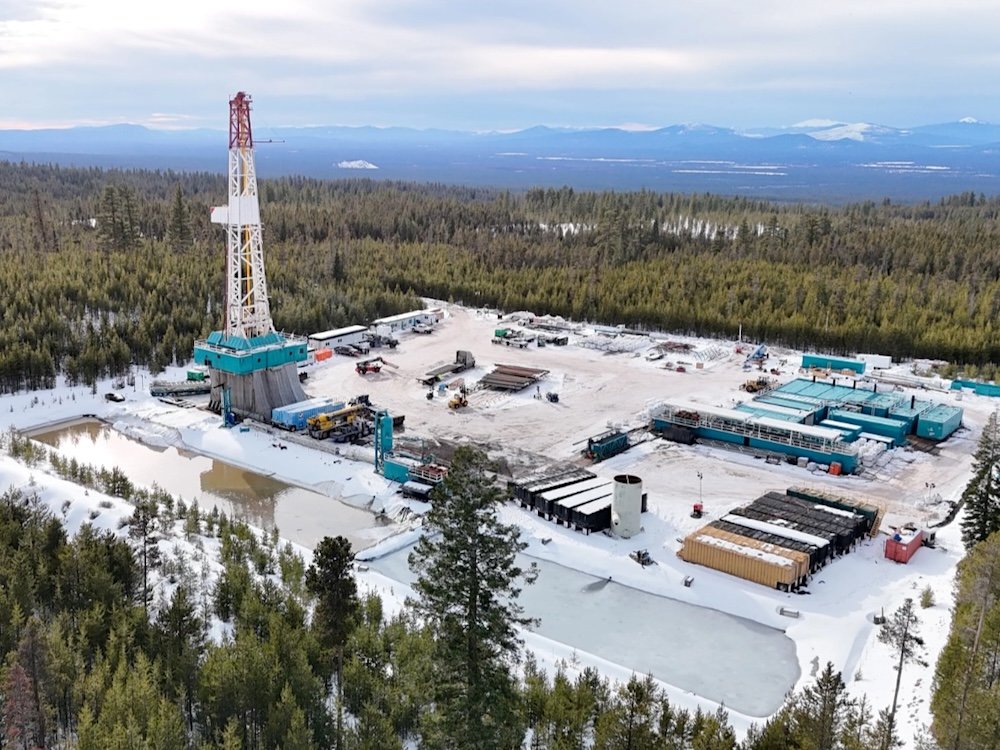
Oregon’s Newberry project uses Canadian expertise to show geothermal energy is far more doable than before. Photo via Newberry project.
A day’s drive south of Vancouver, on the slopes of the Newberry Volcano in Oregon, a groundbreaking geothermal project has demonstrated the commercial viability of generating clean, secure electricity from hot dry rock.
And this was achieved in subsurface conditions that occur here in Canada, with Canadian experts, using a drilling rig brought in from Grande Prairie, Alberta.
The Newberry project, led by Mazama Energy with funding from the U.S. Department of Energy, has successfully created an enhanced geothermal system that circulates water through hard rock at record-breaking temperatures of 331 C.
This project represents a major milestone towards producing geothermal energy from water hotter than 375 C, where water changes to a supercritical state that carries five times more energy than the subcritical water typically circulated in geothermal projects.
Enhanced geothermal systems generate electricity by using a pair of wells to circulate water through deep, hard rock, where it absorbs heat and then flows back to the surface to drive a turbine. These systems artificially create a geothermal reservoir several kilometres underground, making geothermal possible all over the world, rather than in select regions where geothermal reservoirs naturally occur.
Newberry is a successful proof of concept that this technology works, made possible by Canadian firms such as Pro-Pipe Service, Ensign Energy Services, Hephae and others. Yet none of these breakthroughs are occurring in Canada.
How is it that, despite our world-class expertise and abundant heat resources, Canada still does not have a single stand-alone geothermal power plant anywhere in the country? This is a classic example of how Canadian expertise is outsourced to other countries, aiding in major technological breakthroughs and economic development abroad, while our own domestic energy strategies stagnate.
Canadians are world-renowned for their drilling and subsurface development expertise, including for geothermal projects. One of the two lead researchers on Utah’s groundbreaking research initiative, the Frontier Observatory for Research in Geothermal Energy, John McLennan, is a Canadian engineer. And the Calgary-based geothermal firm Eavor just brought its flagship closed-loop heat and electricity project online — in Geretsried, Germany.
Clearly, we have the skills to unlock geothermal energy. And we have the heat, too.
The United States is the largest producer of geothermal electricity in the world, and most of those 3.9 gigawatts are produced in the Cascade Volcanic Arc that spans the western states — California, Idaho, Utah and Washington (think Mount St. Helens). Geology doesn’t stop at the border: these volcanic mountain ranges run all the way through B.C., Yukon and Alaska.
B.C. is particularly blessed with near-surface geothermal resources like those found at the Newberry project. Since the 1970s, a series of studies by the Geological Survey of Canada has identified optimal locations for geothermal all across the province. One such site is Mount Meager, near Pemberton, where temperatures of 290 C were measured only three kilometres below the surface. In geothermal terms, that is like striking gold.
B.C. is primed to be a hotbed of geothermal innovation. To kick-start that innovation, we need a network of federal/provincial research facilities, with industry buy-in, to ultimately supply the province with clean, baseload power with minimal surface footprint. And the return on investment would be immense.
The Clean Air Task Force estimates that one per cent of the world’s superhot rock energy within eight kilometres of the surface would provide 68 terawatts of energy, eight times today’s total global electricity consumption. By pairing B.C.’s rich geothermal resources with Canadian subsurface engineering, Canada could unleash this novel energy supply at a critical moment of global energy insecurity.
And the opportunity isn’t limited to superhot rock. As the Cascade Institute’s recent report “The Deep Heat Advantage” reveals, continued innovation in harnessing geothermal from the mid-range temperatures found in Alberta, Saskatchewan and the Northwest Territories could make geothermal competitive with solar and combined-cycle gas power. Canadian-led advancements in drilling, well design and reservoir creation technologies in our diverse range of geologies will bring us closer to the Earthshot of clean, secure baseload power, anywhere.
Canada has a competitive edge in geothermal energy — one that can truly make us an energy superpower. By deploying our own expertise towards geothermal innovation across our broad spectrum of geological settings, we can unlock vast resources of clean, firm, renewable heat and power. Canadians are already doing this around the world. It’s time to turn this expertise towards our own resources.
It’s time to wake the sleeping giant of Canadian geothermal.
Canadian geophysicist Rebecca Pearce is the science lead with the Cascade Institute’s Ultradeep Geothermal program at Royal Roads University.