
January 9, 2026
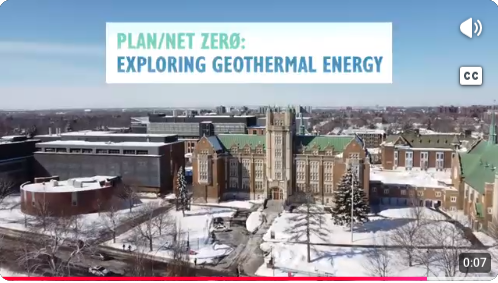
As part of Concordia’s PLAN/NET ZERØ initiative, the university is exploring clean energy solutions across its campuses, beginning with a feasibility study at Loyola Campus.
This study is assessing the potential for a low-carbon heating and cooling network, including the possibility of using geothermal energy as a renewable energy source. The aim is to create a resilient, flexible system that could also serve as a hub for innovation and research in urban energy. To validate this option, the thermal conductivity of the ground on campus must be measured. For this reason, exploratory drilling occurred October 14-16, 2025.
Why it matters
Geothermal energy could play a key role in a future district energy system at Loyola, enhancing resiliency and reducing emissions alongside other low-carbon sources such as heat recovery. Potential benefits include:
Delivering constant, 24/7 renewable heating and cooling.
Requiring only a minimal land footprint, ideal for an urban campus.
Serving as both a heat source and a heat storage system.
Positioning Concordia as a leader in turning deep science into practical climate action.